
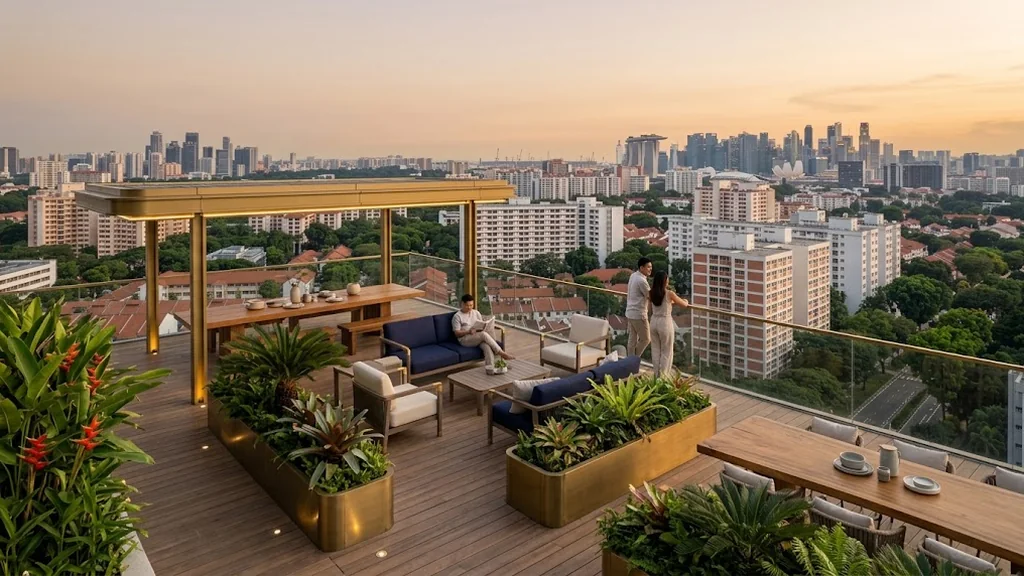
About 500 metres from Dorset Road sits the single largest planned change in this part of District 8: the redevelopment of the former Farrer Park sports ground, a site of roughly ten hectares, into public housing integrated with sports and recreational facilities.
What the Site Was
Farrer Park was, for decades, an unofficial sports hub. Infrastructure built up from the 1950s through the 1980s supported hockey, cricket and football, and the site carried a swimming complex and a boxing gym used by the Singapore Amateur Boxing Association. Between the 1990s and the 2000s much of that was cleared to make way for the North East Line and for housing, and Farrer Park MRT opened in June 2003.
What remained was a large parcel of underused land inside the city fringe — the kind of thing that eventually gets a plan attached to it.
What Is Planned
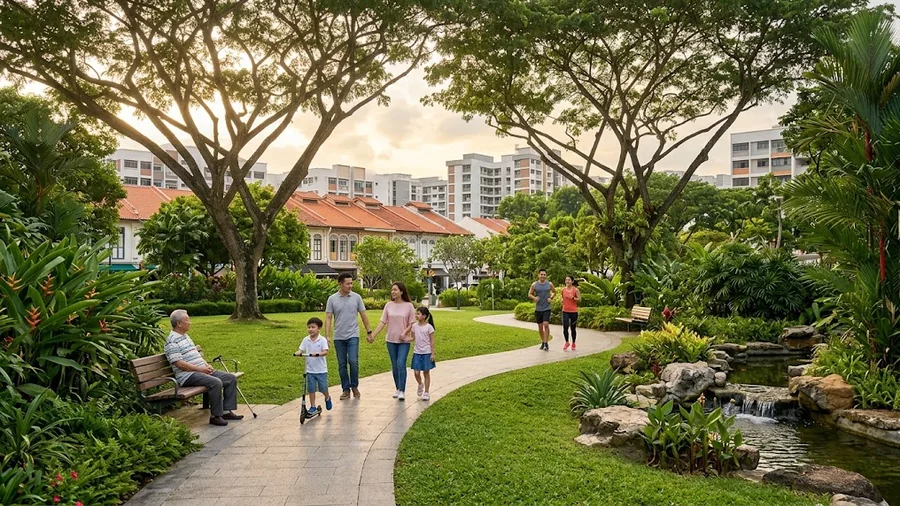
The redevelopment couples housing with sport rather than replacing one with the other. Public housing is planned at a potential yield of around 1,600 flats, integrated with new and restored sports and recreation facilities. The Urban Redevelopment Authority and Sport Singapore chose to retain and rework heritage landmarks on the site, including the former swimming complex and the boxing gym, following engagement with heritage and sports groups and local residents.
The intent is to keep Farrer Park legible as a sporting and social node rather than converting it into undifferentiated residential land.
What This Means for the Surrounding Streets
Two effects, and they pull in different directions. It is worth being straightforward about both rather than presenting only the favourable one.
On the positive side, restored sports and recreation facilities within walking distance are a genuine amenity gain for a neighbourhood that is currently better served for shopping and healthcare than for sport. Green and active space at this scale, this close to the city, is not something that can be created later.
On the other side, roughly 1,600 new public housing units is a meaningful addition of supply and a change to the neighbourhood’s composition. Construction on a site of that size runs for years and brings the usual accompaniments — hoarding, heavy vehicle movements and noise on the approach roads.
How to Weigh It
For a buyer looking at a completion date around 2030, the two timelines are likely to overlap. The reasonable expectation is a period of construction activity in the vicinity followed by a materially better-served neighbourhood.
The other consideration is supply. New public housing does not compete directly with private condominium stock for buyers, but it does add rental supply to the immediate area, which is worth factoring in if the purchase is investment-led rather than owner-occupied.
Where to Verify the Detail
Plans of this kind evolve, and the figures quoted here reflect what has been publicly reported rather than a final approved scheme. The Urban Redevelopment Authority’s Master Plan is the authoritative source for zoning and intensity on the parcel, and the Housing and Development Board publishes launch details as sites reach the Build-To-Order programme.
For the current amenity picture around Dorset Gardens, see the amenities page. The District 8 guide covers the surrounding streets as they stand today.
Register for Dorset Gardens Updates
Floor plans, the site plan, the e-brochure and the price list go to registered parties first. There is no cost and no obligation.